
Questions
Animal Hospital Berkeley Surgery Cost Dog: What to Expect
Dog surgery costs in Berkeley vary widely, typically from a few hundred to several thousand dollars depending on the procedure, complexity, and hospital. At Campus Veterinary Clinic, we provide a detailed estimate before surgery and offer payment options like CareCredit to help manage costs.
Dog Surgery Cost at Berkeley Animal Hospitals: Common Procedures and Prices
The cost of dog surgery in Berkeley varies significantly based on the procedure, your dog's size, and the hospital's location. Below is a general range for common surgeries at Berkeley animal hospitals. These are estimates; your vet will provide a precise quote after examining your dog.
| Procedure | Typical Cost Range | What's Included |
|---|---|---|
| Spay (female) | $200 – $600 | Anesthesia, surgery, monitoring, pain meds |
| Neuter (male) | $150 – $400 | Anesthesia, surgery, monitoring, pain meds |
| Dental cleaning with extractions | $500 – $1,500 | Anesthesia, cleaning, extractions, pain meds |
| Lump removal (small) | $300 – $800 | Anesthesia, biopsy, surgery, histopathology |
| ACL/TPLO (knee) | $2,500 – $5,000+ | Orthopedic surgery, implants, anesthesia, hospitalization |
| Foreign body removal (e.g., swallowed toy) | $1,500 – $3,000 | Abdominal surgery, anesthesia, hospitalization, meds |
These ranges are typical for the Bay Area, but actual costs depend on your dog's health and the complexity of the case. At Campus Veterinary Clinic, we provide a detailed written estimate before any surgery, so you know exactly what to expect.
Why Dog Surgery Costs Vary at Berkeley Animal Hospitals
Several factors influence what you'll pay for dog surgery in Berkeley. Understanding them helps you decide whether a hospital is a good fit for your budget and your dog's needs.
| Factor | Why It Matters | Typical Range (General) |
|---|---|---|
| Type of procedure | Simple soft-tissue surgery (e.g., lump removal) costs less than orthopedic or complex internal surgery. | Varies widely; ask for a quote. |
| Anesthesia and monitoring | Safer anesthesia protocols and continuous monitoring add to the cost but reduce risk. | Varies; more monitoring means higher cost. |
| Pre-surgical bloodwork | Baseline blood tests catch hidden issues before anesthesia; often required for seniors. | Varies; often an add-on. |
| Hospital vs. clinic | Full-service hospitals with advanced equipment and 24/7 staffing charge more than low-cost clinics. | Varies; hospitals typically cost more. |
| Your dog's health and age | Older or sicker dogs may need extra tests, fluids, or longer recovery stays. | Varies; individual assessment needed. |
| Medications and aftercare | Pain meds, antibiotics, e-collars, and follow-up visits are often separate. | Varies; ask for a full estimate. |
A good fit if…
- You want a full-service hospital with comprehensive pre-op testing and monitoring.
- Your dog has underlying health issues that need extra attention.
- You value a clear, itemized estimate before you commit.
Consider another option if…
- You're on a tight budget and only need a basic, low-risk procedure.
- You're willing to trade some amenities for a lower price.
To decide, get itemized estimates from two or three Berkeley animal hospitals and compare what's included. Ask about bloodwork, anesthesia, monitoring, and aftercare so you're comparing apples to apples. Our team at Campus Veterinary Clinic is happy to walk you through the estimate so you know exactly what your dog's surgery will involve.
Preparing Your Dog for Surgery in Berkeley: Steps and Recovery Tips
Once you've scheduled your dog's surgery, follow these steps to prepare and support recovery. Always follow your vet's specific instructions.
- Confirm fasting instructions. Most surgeries require fasting for 8–12 hours before anesthesia; your vet will give exact timing.
- Arrange transportation and help. Plan for someone to drive your dog home and stay with them for the first 24 hours.
- Prepare a quiet recovery space. Set up a comfortable, low-traffic area with soft bedding and easy access to water.
- Follow post-op medication and wound care. Give pain meds as prescribed, keep the incision clean and dry, and prevent licking with an e-collar.
- Limit activity. Restrict running, jumping, and stairs for the recommended period—often 10–14 days.
- Watch for warning signs. Call your vet if you see swelling, redness, discharge, vomiting, or if your dog seems unusually painful.
Recovery times vary by procedure and your dog's age and health. Your vet will schedule a follow-up to check healing. If you're worried about pain, our guide on signs of pain in dogs can help you know what to watch for.
Financing Dog Surgery in Berkeley: Payment Plans and Assistance
Affording surgery is a common concern. At Campus Veterinary Clinic, we accept cash, checks, credit cards (Visa, Mastercard, Discover, American Express), and CareCredit. CareCredit offers short-term financing with no interest if paid in full within the promotional period, which can ease the burden.
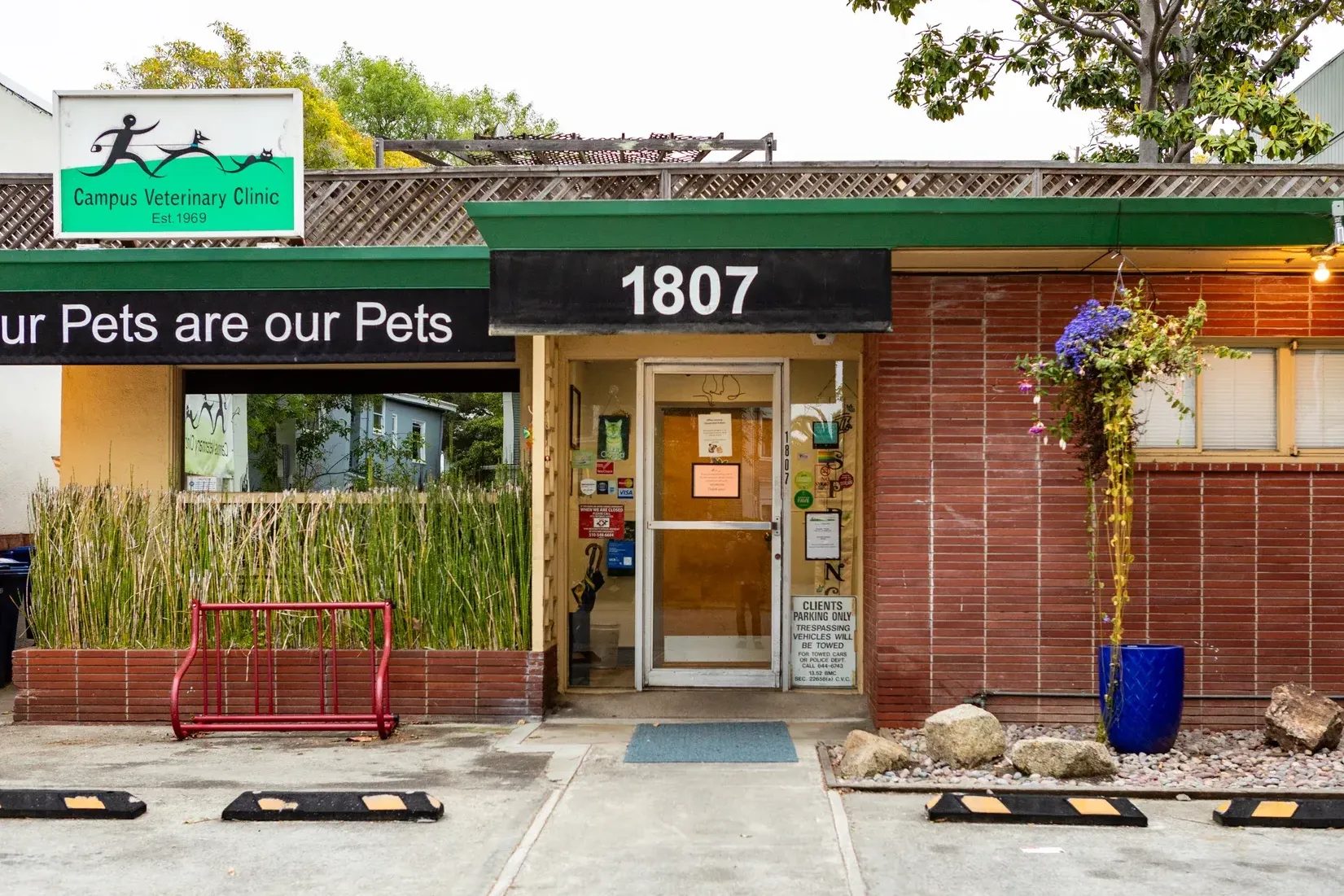
For more options, explore our guide to paying vet bills with no money and payment plans in Berkeley. You can also call us at +1 (510) 549-1252 to discuss a payment plan tailored to your situation. We're located at 1807 Martin Luther King Jr Way, Berkeley, CA 94709, and we're open Monday through Friday, 7 AM to 6 PM.
Directions to our animal hospital in Berkeley from Rose Pizzeria
Start at Rose Pizzeria and head to Campus Veterinary Clinic at 1807 Martin Luther King Jr Way, Berkeley, CA 94709.
Sources
Frequently asked questions
Does Campus Veterinary Clinic offer a free first exam?
Yes, new clients receive a free first exam (terms apply). This is a great way to get a surgical consultation and a cost estimate for your dog's procedure.
What payment methods do you accept?
We accept debit and credit cards (Visa, Mastercard, Discover, American Express), cash, checks, and CareCredit. CareCredit allows you to spread out payments, making surgery more manageable.
Do I need to fast my dog before surgery?
Yes, typically your dog should not eat after midnight the night before surgery, but water is usually allowed. Your vet will give you specific instructions based on your dog's health and the procedure.
How long does recovery take after dog surgery?
Recovery varies by procedure. Soft tissue surgeries often heal in 1-2 weeks, while orthopedic surgeries like TPLO may take 8-12 weeks. Your vet will provide a detailed recovery plan.
Also asked as
- How much does dog surgery cost in Berkeley?
- What affects the price of dog surgery at a Berkeley animal hospital?
- How can I pay for my dog's surgery in Berkeley?