
Questions
What Words Do Dogs Love to Hear the Most? A Complete Guide
Dogs love words associated with positive experiences, especially 'walkies,' 'treat,' 'fetch,' 'good boy/girl,' 'dinner,' and 'squirrel.' These words trigger excitement because they're linked to rewards and activities. Dogs also respond to tone and context, so say them with enthusiasm.
Top Words Dogs Love to Hear Most
Dogs love words that signal something exciting is about to happen. The top words that get tails wagging are walkies, treat, fetch, good boy/girl, dinner, squirrel, and din dins. These words are powerful because they're tied to activities and rewards your dog already loves. When you say them, your dog's brain lights up with anticipation.
Beyond these, words like come, yes, and what's that? also get strong reactions. 'Come' is often followed by attention or a walk, 'yes' is a marker for treats during training, and 'what's that?' signals something interesting to investigate. The key is that each word has been paired with a positive outcome repeatedly.
At our Berkeley clinic, we see how these words can even help during vet visits. Using a calm, happy tone with a favorite word like 'treat' can ease anxiety in the exam room. For more on communicating love, see [[how-do-i-say-i-love-you-in-a-dog|how to say I love you in dog]].




How Many Words Can Dogs Understand?
The average dog understands 89 words and phrases, but some can learn over 200. That's roughly the vocabulary of a 2-year-old child. Dogs are especially good at learning nouns for objects they care about, like 'ball' or 'leash,' and verbs like 'sit' or 'stay.'
Vocabulary size depends on breed, age, and how much you train. Working breeds like Border Collies often excel, but any dog can learn more with consistent practice. Even senior dogs can pick up new words, though it may take longer. The more you talk to your dog and reinforce words with actions, the larger their vocabulary grows.
If you're curious about your dog's cognitive abilities, you might wonder [[is-it-true-that-dogs-have-the-iq-of-a-3-year-old|if dogs have the IQ of a 3-year-old]] — the answer might surprise you.
Do Dogs Understand the Meaning of Words?
Yes, dogs understand the meaning of words, not just tone. Brain imaging studies show that dogs process words in a similar way to humans, using the left hemisphere for language. They can distinguish between words they know and similar-sounding nonsense words, even when spoken in a neutral tone.
However, tone matters too. Dogs are masters at reading your voice and body language. When you say 'good boy' with a flat tone, they may still respond, but an enthusiastic tone amplifies the effect. The best approach is to pair clear words with consistent gestures and rewards.
For example, saying 'walkies' while picking up the leash teaches your dog that the word predicts the walk. Over time, the word alone triggers excitement. This is why [[do-dogs-know-their-names|dogs know their names]] — they learn that the sound 'Fido' means attention is coming their way.
Sounds and Noises Dogs Love to Hear
Dogs love a variety of sounds beyond words. High-pitched, cheerful tones are universally appealing, especially when paired with praise. The sound of a treat bag crinkling, a leash jingling, or a squeaky toy instantly grabs attention because they signal fun.
Other sounds dogs enjoy include the can opener (if it means food), your voice when you're happy, and familiar songs that you've played during playtime. Some dogs even love the sound of running water from a hose or fountain.
When introducing new sounds, pair them with positive experiences. For example, play a specific song during fetch sessions, and your dog will start wagging when they hear it. This kind of conditioning is a great bonding tool and can be used in training, as we discuss in our [[how-to-train-a-stubborn-dog-berkeley|training tips for Berkeley dogs]].
Directions to our animal hospital in Berkeley from Berkeley City College
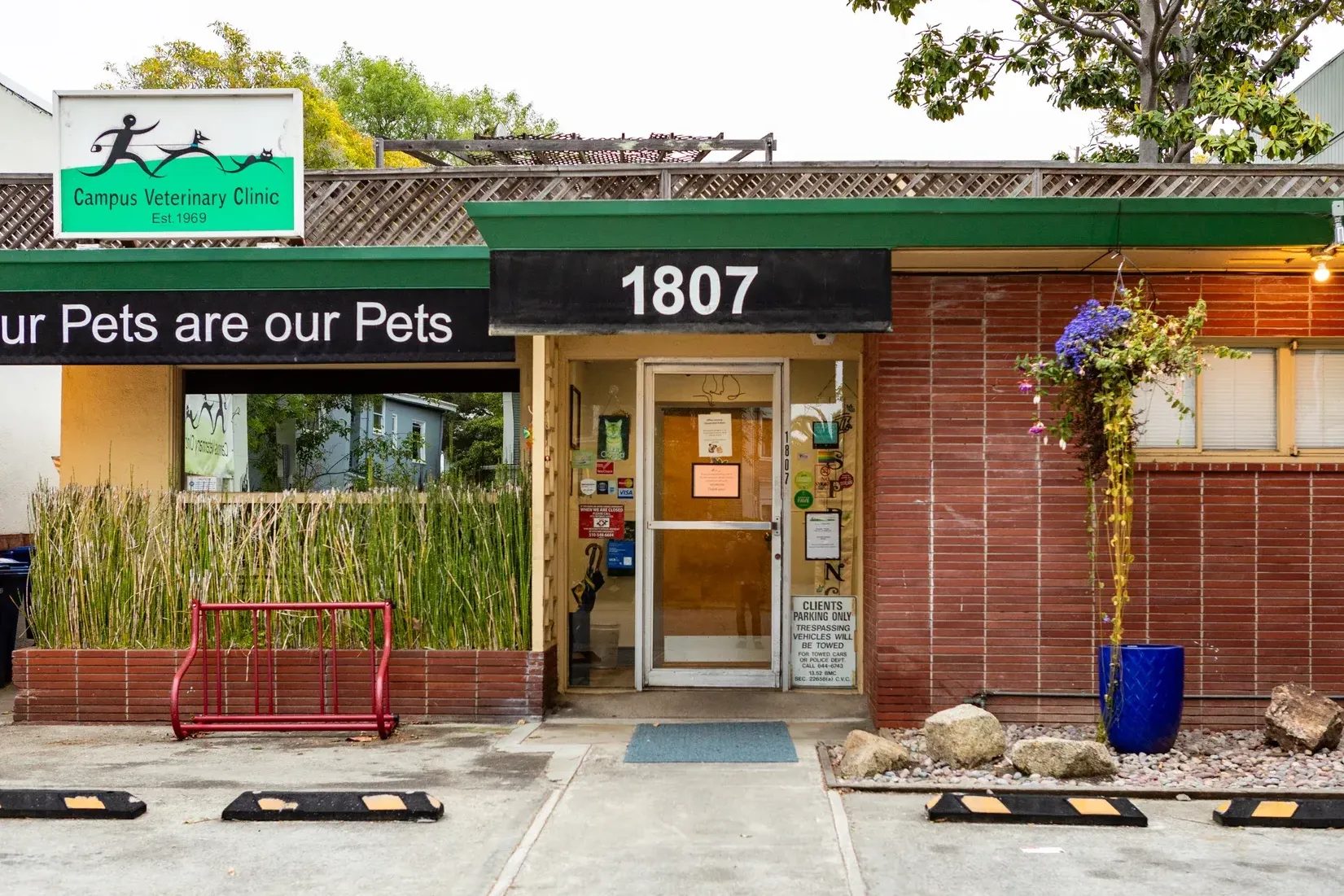
Start at Berkeley City College and head to Campus Veterinary Clinic at 1807 Martin Luther King Jr Way, Berkeley, CA 94709.
Using Your Dog's Favorite Words for Training and Bonding
- Identify high-value words — Notice which words make your dog's ears perk up. It could be 'walkies,' 'treat,' or 'fetch.'
- Pair with rewards — Say the word right before giving a treat or starting a fun activity, so your dog connects the word with the payoff.
- Use a happy tone — Dogs respond to enthusiasm, so say the word with energy and a smile.
- Be consistent — Use the same word every time, and avoid using it for negative situations.
- Incorporate into training — Use a favorite word as a reward marker. For example, say 'yes' when your dog does a command correctly, then give a treat.
- Practice daily — Short, fun sessions work best. Over time, your dog will respond faster and bond more deeply with you.
Choosing a Dog Name They'll Recognize
A good fit if…
- It has one or two syllables — Names like 'Bella' or 'Max' are easy for dogs to distinguish.
- It uses hard consonants — Sounds like 'k,' 't,' and 'p' stand out (e.g., 'Rocky,' 'Piper').
- It doesn't rhyme with common commands — Avoid names that sound like 'sit,' 'stay,' or 'come' to prevent confusion.
Consider another option if…
- It's long or complex — A three-syllable name may be harder for your dog to catch.
- It sounds like a command — For example, 'Kit' sounds like 'sit.'
If you're adopting a new dog, test a few names and see which one gets the most tail wags. For more help, our team at Campus Veterinary Clinic in Berkeley can offer advice during your first visit.
Sources
Frequently asked questions
What words can dogs understand?
Dogs can understand many words, especially those linked to actions and objects like 'sit,' 'stay,' 'ball,' and 'treat.' They also learn phrases like 'want to go for a walk?' and 'where's your toy?' The average dog knows about 89 words, but they can learn many more with training.
Which dog has the highest IQ?
Border Collies are often considered the most intelligent dog breed, known for their problem-solving and obedience. However, intelligence varies by individual and training. Any dog can learn a impressive vocabulary with consistent, positive reinforcement.
How long does 1 hour feel to a dog?
Dogs experience time differently than humans. While we can't know exactly, research suggests they live in the moment and don't perceive hours the same way. They rely on routines and cues like daylight and your presence to anticipate events.
How do you describe a dog in creative writing?
Focus on sensory details: the sound of their paws on the floor, the warmth of their breath, the way their tail wags. Use action verbs and show their personality through behaviors. For example, 'He greeted me with a full-body wiggle and a sloppy kiss.'
What is a cute word for dog?
Common cute words for dogs include 'puppy,' 'pooch,' 'fur baby,' and 'canine companion.' Many people also use playful terms like 'doggo' or 'pupper.' The best word depends on your dog's personality and your relationship.
Also asked as
- What words make dogs happy?
- What sounds do dogs love?
- How many words can a dog learn?